A Variety Night at Home, Built Around Changing Pace
Plan a variety night at home with a clear order, simple handovers and room for guests to listen or join in, without turning your living room into a venue.
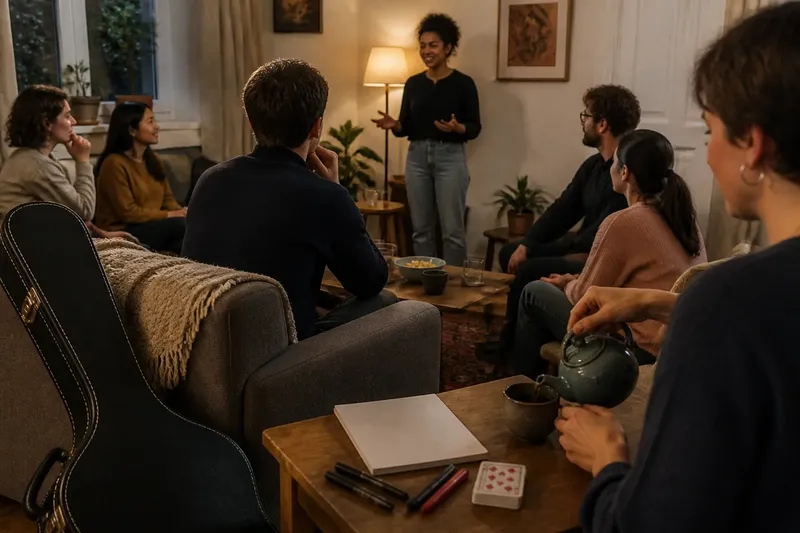
A guitar case rests beside the sofa while someone pours tea, and the first performer waits for the room to settle. Planning a variety night at home is less about arranging a sequence of contrasting acts than deciding what kind of gathering you want to host: a shared performance, a party with occasional contributions, or something between the two.
Choose the kind of evening you are hosting
The host’s first decision is how much the performances should shape the gathering. A performance-led evening gives each contributor a clear turn and asks guests to direct their attention towards it. A looser party might have a song or card trick emerge between stretches of conversation, with no expectation that everyone stops what they are doing.
Neither approach needs a formal programme. Tell contributors which kind of evening you have in mind, and let guests know whether they can expect to sit and listen or may come and go between acts. That small piece of context helps people prepare and makes the room’s changing attention feel intentional rather than confusing.
It is not worth the effort to imitate a theatre with printed programmes, elaborate announcements and formal applause cues unless those details are part of the fun. A warm welcome and a clear invitation are usually enough.
Make a running order that serves the room
Arrange acts around practical needs, not just their mood. Put the dance contribution where the floor is clear, the reading where guests can hear, and any activity that needs pens or cards near the table holding those materials. This makes the order useful to the people performing as well as to the audience.
Check what each person needs before setting the sequence: a chair, a quiet moment, a nearby plug socket or space to gather viewers around. Avoid placing two acts back to back if the same furniture or equipment has to be moved between them. A little preparation can spare the host a string of awkward resets.
Say you have four friends contributing: one will sing a gentle song, one has a comic story, another can show quick sketches, and the last has a simple word game. The singer needs a quiet moment; the sketches need paper and a clear view; the game works best when people are comfortable joining in. You put the story first, set the song after it, leave the sketch materials on a side table, and close with the game. The order gives each friend a workable set-up, while the game lets guests shift back into conversation afterwards.
Keep the plan flexible. If someone arrives late, move their contribution to a convenient point; if a conversation is still going, let it finish before you gather attention. A running order is there to help you decide what to do next, not to make you interrupt a good moment.
Agree on a comfortable shape for each act
Ask each contributor to choose a piece with a recognisable ending: one song, one short story, a single dance phrase or a small drawing demonstration. A clear finish makes it easier for guests to respond and for the host to hand over without inventing a closing cue.
Let contributors tell you if their piece needs more room, then consider whether the space and the rest of the evening can accommodate it. If it cannot, ask whether they have a shorter piece they would enjoy sharing. Do not ask someone to pad a contribution to fill an imagined slot, or to rush through material they care about.
Agree in advance how audience participation will work. A call-and-response can be open to anyone, while a game may need volunteers. Make it easy to pass, and avoid turning an unprepared guest into the evening’s entertainment.
Set up the room for the acts you have chosen
Use the room you have rather than trying to create a miniature venue. A loose curve of chairs can help people see one another and the performer; a clear patch of floor can serve as a dance space. Leave an easy route to the door and kitchen so guests can move without crossing directly in front of someone performing.
Think through sound and light from the audience’s seats. If people cannot hear a speaker over the kitchen, close the door or choose a quieter spot. A lamp aimed towards a performer can make a face or drawing easier to see, while a bright window behind them may leave them in shadow.
Keep materials close to where they will be used. Put paper and pens on a side table, set a chair where a storyteller can see the group, and leave a guitar beside its player. For equipment or activities where safe use depends on a maker’s instructions or local rules, follow those instructions and seek qualified advice when needed.
Hand over without turning the night into a production
A short introduction can give guests a reason to turn towards the next contributor. Use a name and a little context, then let the performer begin. If one friend is handing over directly to another, a simple “Over to you” may be all the transition requires.
Allow time for people to move a chair, fetch a drink or find a comfortable spot. Silence and conversation are both fine during a changeover; background music is optional. If changing the furniture would interrupt the gathering, leave it as it is and choose an act that works with the arrangement.
Make the beginning and ending easy to recognise. You might welcome everyone before the first contribution, then close with a final reading or a thank-you before inviting people back to conversation. A clear endpoint helps the host avoid adding acts just because nobody has formally called time.
What should a host decide before guests arrive?
- Check the room’s sightlines: sit in the furthest chair and see whether the performer’s face and hands are visible. If they are, keep the arrangement; if not, move the chairs or performer before guests arrive.
- Check the sound: ask someone in the seating area whether ordinary speech carries clearly. If it does, use the room as planned; if it does not, close a door, reduce background noise or choose a better position.
- Check the floor space: mark out where a dance or movement act would take place. If guests can move without bumping furniture, leave the space clear; if not, shift furniture or ask the contributor to choose a seated piece.
- Check each act’s materials: compare what the contributor needs with what is actually available, such as paper, pens, a chair or a suitable power socket. If everything is ready, leave it within reach; if not, provide an alternative or change the order.
- Check how participation is invited: ask whether guests must volunteer, sing along or simply watch. If an act can include a willing audience, explain that people may pass; if it relies on an unwilling guest, ask the contributor to reshape it.
- Check the planned ending: choose a final contribution or a simple thank-you. If it feels like a natural stopping point, keep it; if not, remove an optional act or finish with conversation rather than adding another performance.
What do guests and hosts often ask?
Does every guest need to perform?
No. Ask contributors beforehand and make clear that listening is welcome too. Guests should not have to invent an act after arriving.
Should the host introduce every act?
Only if an introduction helps guests understand who is next or what they are about to see. Keep it brief, or let contributors introduce one another.
What if an act runs longer than expected?
Let the performer reach a clear ending, then decide whether to move, shorten or drop an optional contribution. Do not hurry someone through a prepared piece just to preserve a schedule.
Can a variety night work without a stage?
Yes. A chair turned towards the room or an open corner can give guests a clear place to look. Keep the arrangement comfortable rather than insisting on a formal division between performer and audience.
Keep the gathering open to conversation
Set aside time for people to arrive and catch up before asking them to listen. Between contributions, notice whether guests want another performance or a longer stretch of conversation; the host can offer a choice without making either response seem like a failure.
When planning a variety night at home, prepare the room and clarify what each act needs, then leave space for the people in it to shape the evening. The most useful plan is one that lets a guest fetch a drink, decline a turn or talk about a song afterwards without feeling they have broken the show.