The Curtain Call Before the Curtain Call
See how a curtain call begins before anyone bows, and how a clear final cue gives performers and audiences room for a natural exchange of acknowledgement.
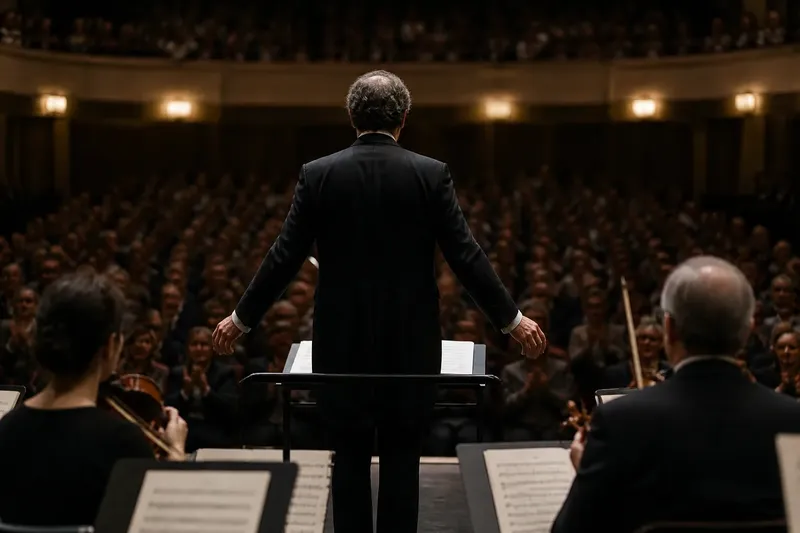
After the final chord at a concert, a conductor may lower their hands and wait while the sound fades. That held instant is the curtain call before the curtain call: the small, deliberate pause that lets the music finish before performers turn to receive applause.
This pause is not a separate, universally named ceremony, and it does not replace the bow or return to the stage. It is a practical prelude: a final image, silence, blackout or unhurried exit that keeps the work’s ending intact before acknowledgement begins. Its shape depends on what has just been performed.
The pause gives the ending room to settle
A final note may still be ringing, a dancer may be holding a pose, or a comedian may have delivered a last line that needs a beat to land. If performers bow too soon, the gesture can cut across that ending; if they wait, the audience can register the work before responding to the people who made it.
There is no single correct duration. A concert ending may call for waiting until the sound has faded, while a comic ending may need only enough space for laughter to subside. The useful cue is observable: the last sound, movement or line has resolved, and the audience has a clear opening to respond.
The curtain call before the curtain call takes different forms
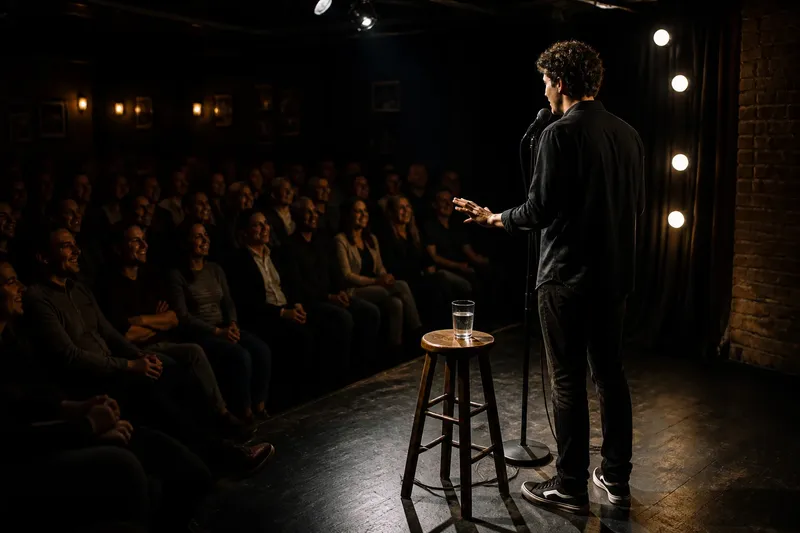
In dance, the prelude may be the final pose held without movement. In a concert, it can be the conductor’s stillness after the last note. A solo comic might let a punchline’s laughter settle before stepping away from the microphone, while a variety company can preserve a final tableau before the performers leave and return together.
These choices are not historical evidence for how the curtain call originated. They describe a present-day performance practice: creating a clean boundary between the piece and the acknowledgement that follows. The familiar curtain call itself has different customs across venues and forms, so it is better understood through the choices performers make in a particular room than through a single universal origin story.
A clear cue can prevent the ending from feeling crowded
For performers planning a close, it helps to decide what the audience should see before anyone bows. The cue might be a final blackout, the end of a sustained pose, a conductor lowering their hands, or the last performer leaving the playing space. A consistent sequence makes the change of mode legible without adding another section to the show.
- If the final sound is still ringing, wait for it to fade; if it has resolved, let the performers turn to the audience.
- If a final pose carries the work’s last image, hold it until the audience can read it; if the pose has finished its purpose, release it and begin the acknowledgement.
- If laughter is still covering a comic’s last line, leave a beat for it to settle; if the room has quieted, move on without adding another joke.
- If a blackout is part of the ending, keep it intact before bringing performers back; if there is no blackout, use a clear turn or shared stillness instead.
- If the company needs to return as a group, agree on who signals the entrance; if the performers are already in view, acknowledge the audience from their final positions.
- If the ending is intended to remain quiet, do not add a spoken thank-you merely to fill the pause; if a brief address suits the event, keep it distinct from the finished piece.
A worked example shows how the prelude can be chosen
Imagine a small dance group has a final section that ends in a still tableau, followed by a planned group bow. The performers begin at different points on stage, and the music ends while they are holding the image. They choose to keep the tableau until the final note has faded, then release it together, face the audience and bow once.
The sequence gives the audience two distinct cues: the still image closes the dance, and the shared turn begins the acknowledgement. If the performers bowed while the music was still sounding, the two moments would overlap; if they waited without a clear change, the ending could feel uncertain. The chosen transition makes the distinction visible without extending the dance.
Small decisions matter more than elaborate staging
A pre-curtain-call moment can be as simple as not rushing. Performers do not need to add a flourish, repeat a movement or manufacture applause. It is not worth the effort to choreograph every breath or clap; a clear final image and an agreed cue are usually enough to keep the ending composed.
For a group, the practical questions are modest: who gives the cue, whether everyone is still in view, and whether the audience can tell that the work has ended. For a solo act, the performer may make those choices in the moment, guided by the last sound or the room’s response. In either case, the pause serves the performance rather than calling attention to itself.
What do performers and audiences ask about the moment before a curtain call?
What is the moment before a curtain call?
It is the brief transition after the work’s final sound, line or image and before performers acknowledge the audience. It may be marked by silence, a final pose, a blackout or a deliberate pause.
Is the pause part of the performance?
It can be, especially when a held image or silence completes the artistic ending. In other cases, it is simply a practical interval that lets the final moment resolve before the curtain call begins.
How long should performers wait before bowing?
There is no fixed duration that suits every form or room. Wait until the final sound or action has resolved and the audience has a clear opening to respond, rather than following an arbitrary count.
Does every show need this pause?
No. Some performances move directly into an acknowledgement, while others end in silence or leave without a formal curtain call. The pause is useful only when it supports the ending the performers intend.